It has been an odd couple of months for somebody that relies on information. The data flow simply stopped as the government shut down and that left the prognosticating crowd more dependent on guessing than usual. Granted, it has been pointed out by J.K. Galbraith that the only function of economic forecasting is to make astrology look respectable but we try to react to what the latest data tells us. So, what do we know now? Fortunately, the government is not the sole provider of data, there are many private sources that churn out information as good and sometimes better than what the various agencies put together.
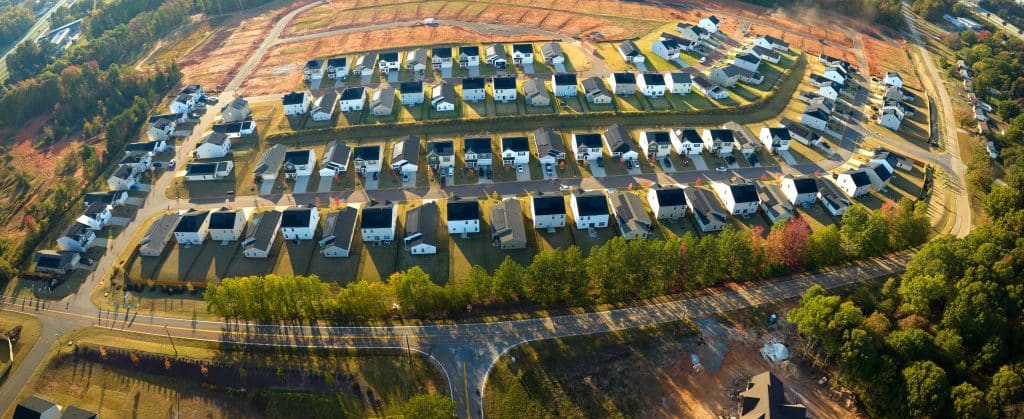
We have a pretty good idea what drives construction demand – residential as well as non-residential. At the heart of the sector is growth and construction is generally following that growth. It is risky for construction to get too far ahead of growth but there is a need to avoid falling too far behind – the search for the development sweet spot. Residential is driven by the need for housing and that means paying attention to migration patterns. At the moment, there is an exodus of people from high tax and high cost-of-living states to those judged more economically reasonable. That prompts departures from the Far West and Northeast and arrivals in the Midwest, Southeast and Mountain West. Job opportunities once dominated motivation for relocating but many people can now work from anywhere and that changes patterns. People are free to choose where they live according to factors such as recreational preferences, proximity to family and so on. These patterns are reflected in local data. The jobless rate for the country as a whole may be 4.3% but in North Dakota it is 2.5% while California sports a rate of 5.5%. Other factors are more traditional and permanent – mortgage rates, job security and the like. A small increase or decrease in the mortgage rate will push the residential market in a new direction. This is an important factor to consider as most business is ultimately local. It I interesting to note national trends in factors such as employment, inflation, growth and the like but what really matters is the local pattern.
Nonresidential construction reacts to a more complicated set of variables. Financing certainly plays a big role as well but a very potentially lucrative project will be worth pursuing even if financing costs are high. Demographics will play a major role as the number of rooftops will be studied by everything from retail to those building government services. The timing is crucial. Support services can’t be developed too soon but late is not an option either. Shifts in business development will drive overall construction and there are three developing arenas that will impact the non-residential sector. The first is the dramatic need for more energy. It is estimated that an additional 44 terawatts of power will be needed in the next three years just to power AI. Texas is planning the construction of at least 25 peaker plants to provide energy during the summer months in 2026. This demand on the grid will only expand with the development of more robotics. A second driver has been health care as the Boomer generation ages and demands more and more care. This has been accelerated by the decentralization of health care – more facilities located closer to where populations are growing. Specialization has also amplified the need for more facilities. Transportation and logistics continue to be a driver as well. The retail trends favor on-line activity and that amplifies the need for warehousing and all the needed elements of supply chain management. The important point is that growth is still taking place in many parts of the nation and in many industries. Overall, the US growth rate is still thought to be in the 4.0 range (according to GDPNow). Many parts of the nation are seeing even better numbers (while others are slower). When it comes to data, the more local the better as in a nation this big almost every state is equivalent to a country.
We often discuss manufacturing as if it was a unified entity but we know that is not accurate. The growth in one sector doesn’t automatically equate to growth in another. Automotive has stalled a bit but is still growing at a faster pace than was the case even a few years ago., Aerospace has been growing aggressively and so has the medical sector. Some of this potential growth is very logical and has been predicted. Medical is surging for the very simple reason that Boomers are aging and demanding more and more from the medical community – a group that has also struggled to find workers. The sector has been forced to rely on technology and robotics more than ever. The fastest growing segment of construction has been in manufacturing as these facilities have to be upgraded to accommodate the machines and technology. The increased demand for power has also been a factor – it is expected the US alone will require an additional 44 terawatts of power just to handle AI.